
Insights
Technical debt
What technical debt is, how to measure it, and how to decide what to pay down first.
Technical debt is the cost of the shortcuts a system carries: work that was done quickly, or before anyone knew better, and now makes every change slower and riskier than it should be.
These articles explain it for the person who pays for it. They describe the kinds of debt and which ones matter, how to measure it without reading the code, and how to choose what to pay down first, so the conversation with a development team is about cost and risk rather than taste.

Legacy technical debt: the debt nobody decided to take
Much technical debt was never a decision: the world moved, the team learned, the knowledge left. Why it stays hidden, and four questions that find it.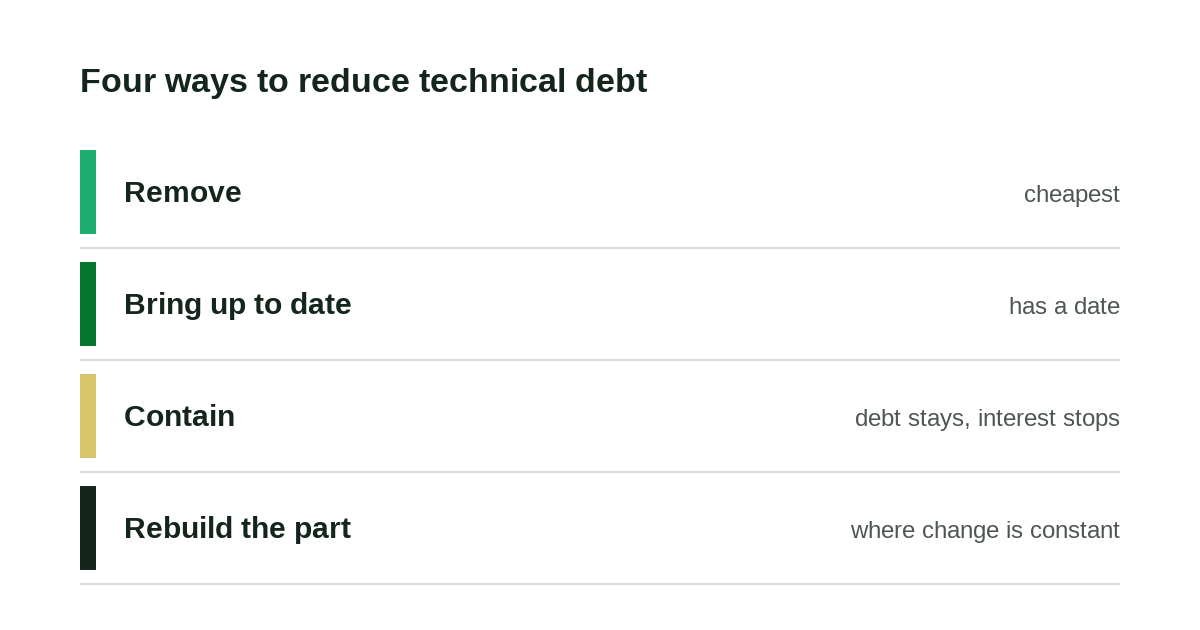
Reducing technical debt: what the work consists of
Reducing technical debt is one of four kinds of work: remove, update, contain or rebuild. What each costs, the order to do them in, and the proof to ask for.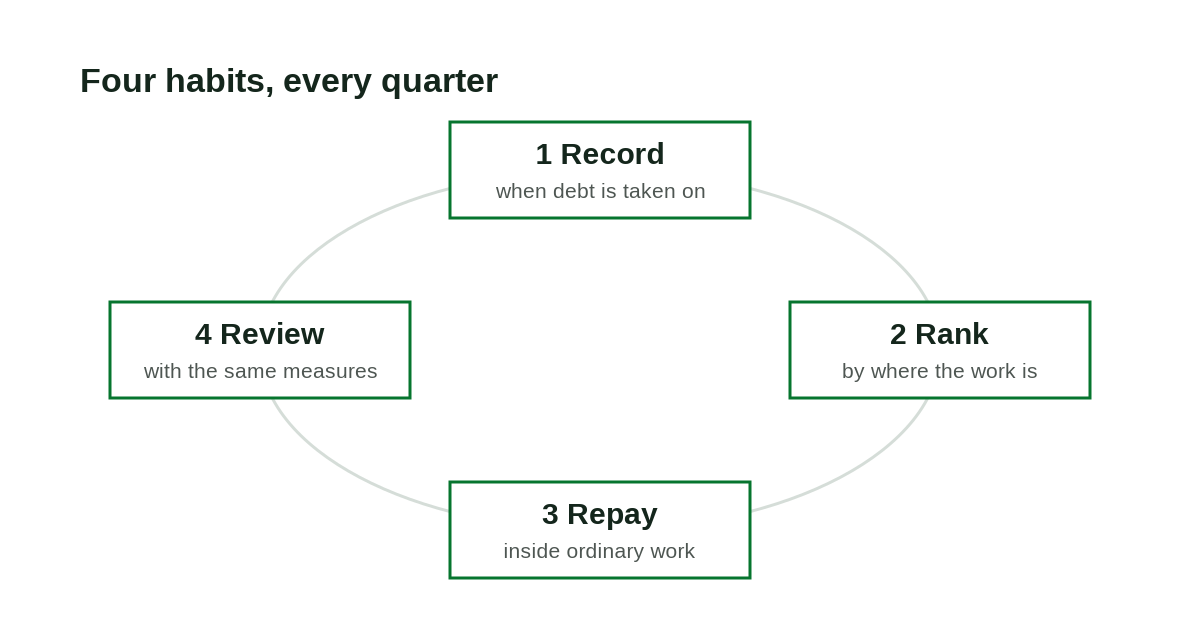
Managing technical debt as a routine, not a rescue
Clean-up projects stall because the business cannot stop for them. Four habits that keep technical debt in hand, and the decisions only the owner makes.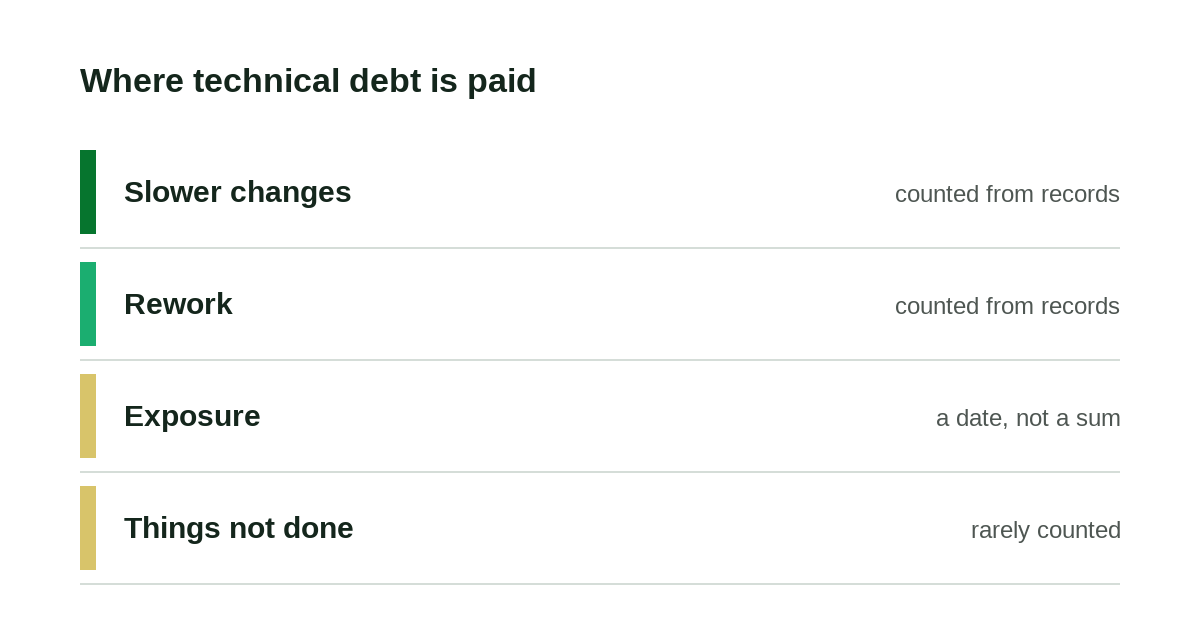
The cost of technical debt, and how to put a figure on it
Technical debt is paid in four places, and only one is near an invoice. How to build a yearly figure good enough to set beside the price of a repair.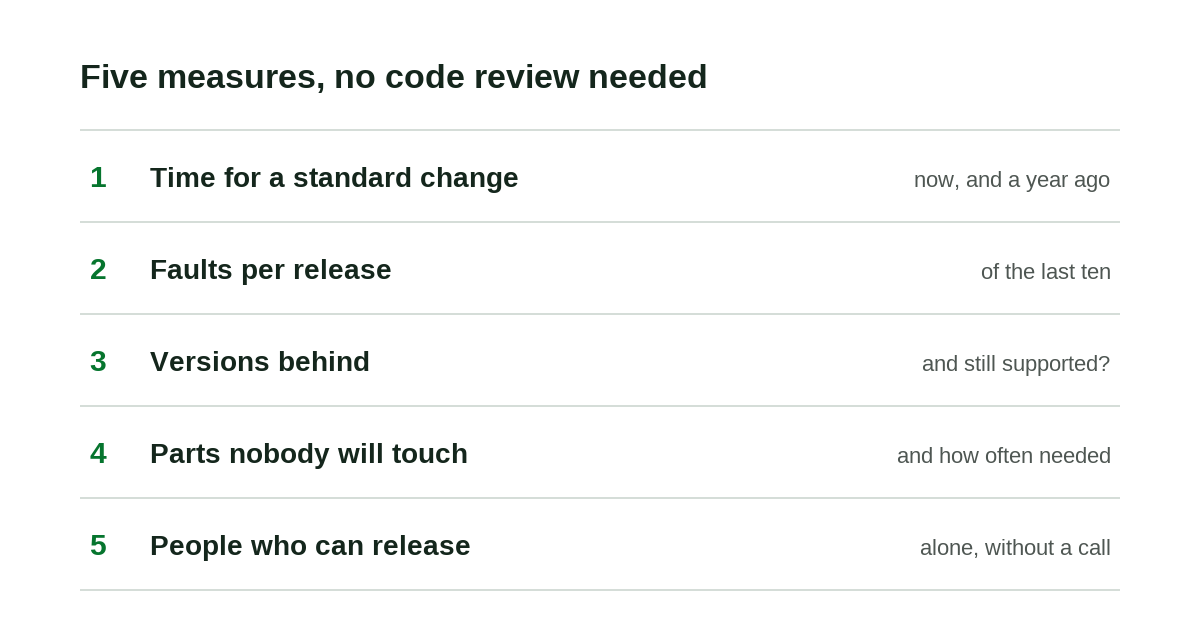
Measuring technical debt without reading the code
Five measures a non-technical owner can ask for to size technical debt, how to read them together, and why a single debt score misleads.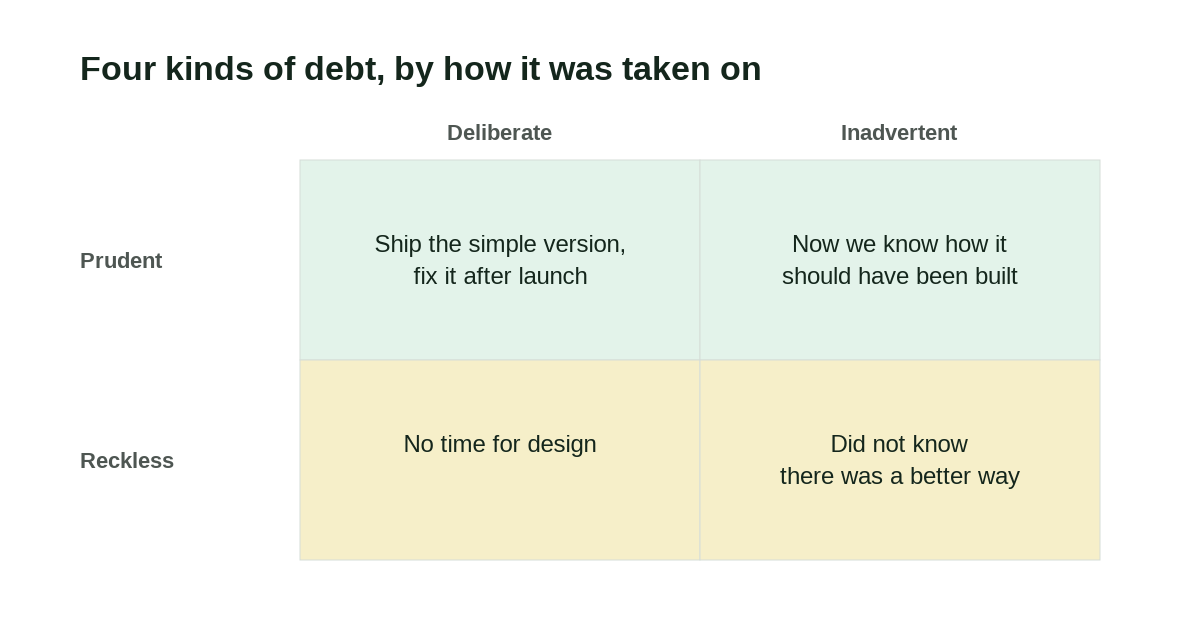
Types of technical debt, and which ones to worry about
Technical debt is not one thing. The four kinds in the quadrant, six categories by where they sit in a website, and which deserve attention first.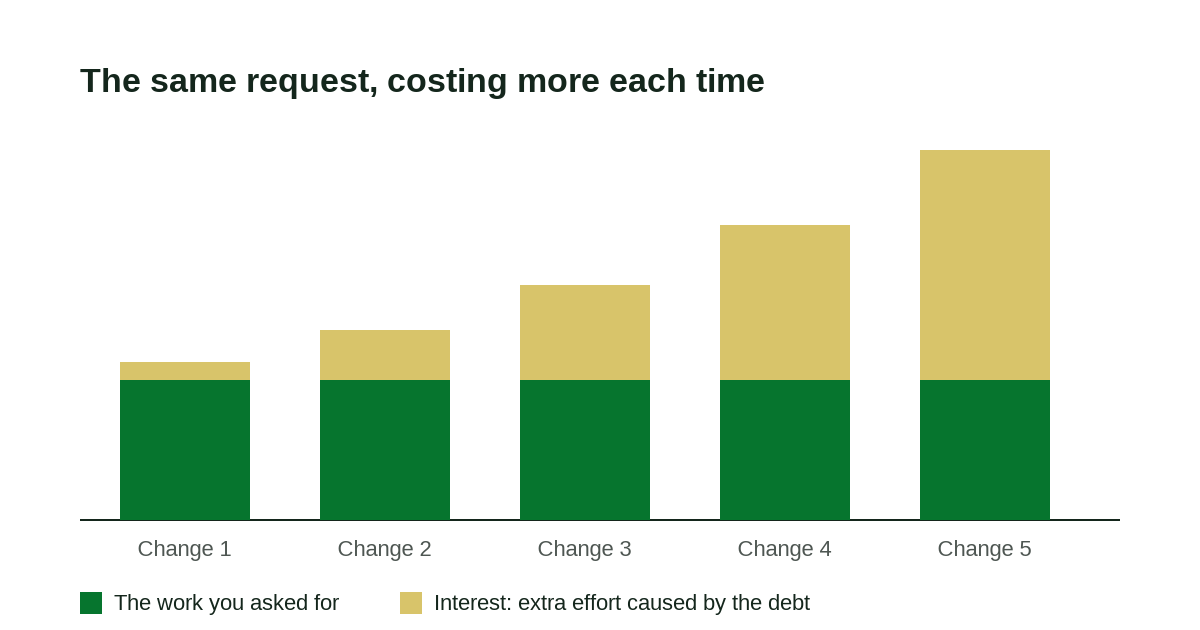
Technical debt, explained for the person who pays for it
What technical debt is, where it comes from, how to tell useful debt from neglect, and the signs that it now costs more than fixing it would.