
Insights
How to judge, plan and carry out work on a website or web application that already earns its keep. Written for the people who decide.
AI in existing products
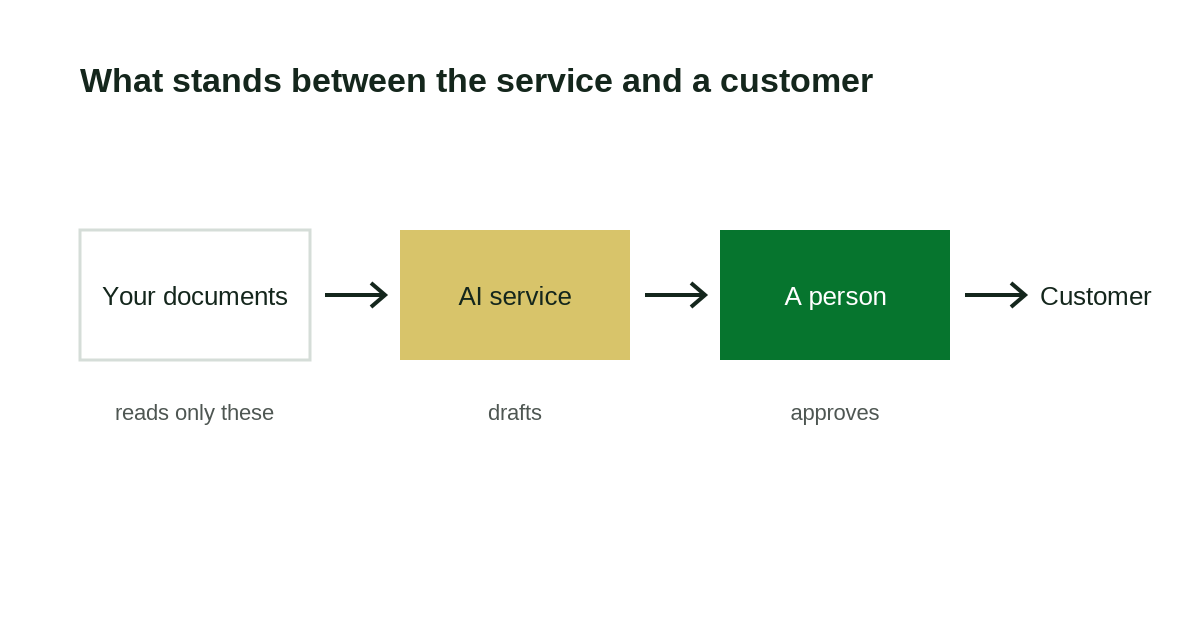
Adding AI features to a website or product that already exists, and what that takes in practice.
API integration
What API integration is, the forms it takes, and what to settle before connecting two systems.
Connected systems
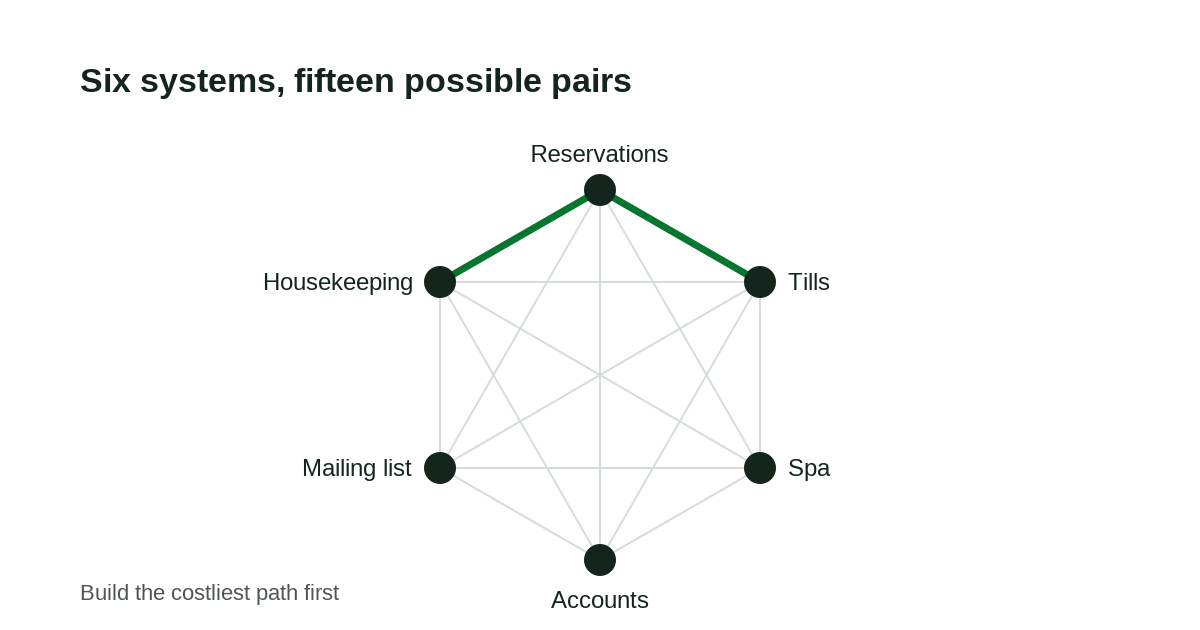
Getting separate applications, including older ones, to share data and work as one.
Legacy systems
Living with, repairing and replacing the systems that still run the business.
Legacy application replatforming: when it is enough
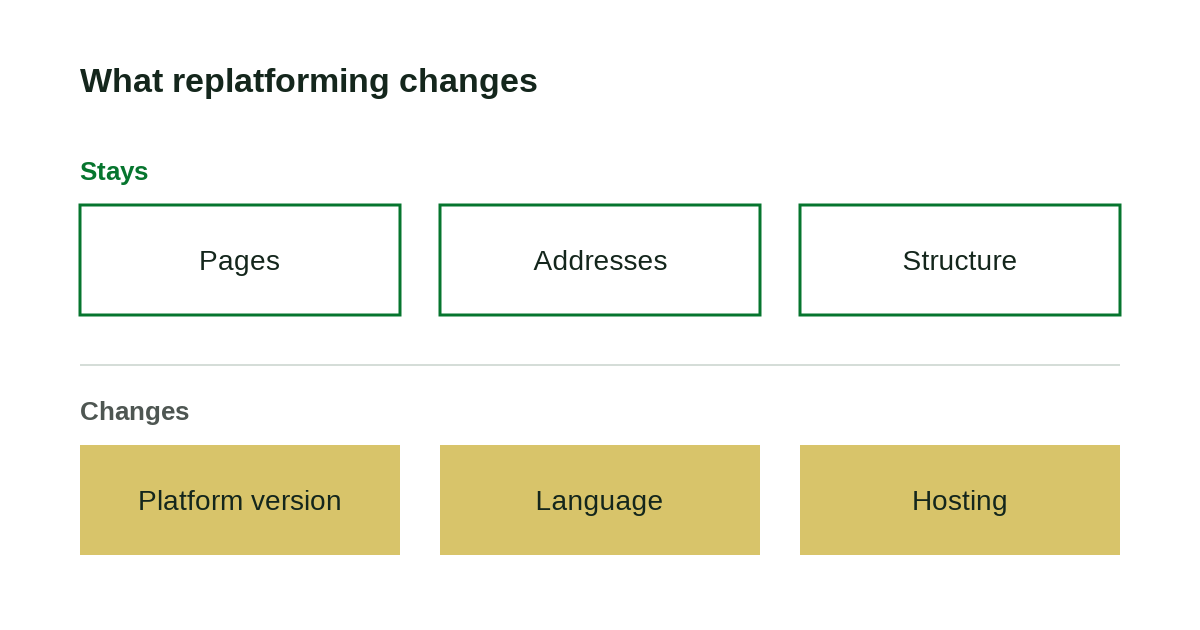
Replatforming moves an application to a current platform and keeps the rest. When that is enough, when it is not, and five questions for any quote.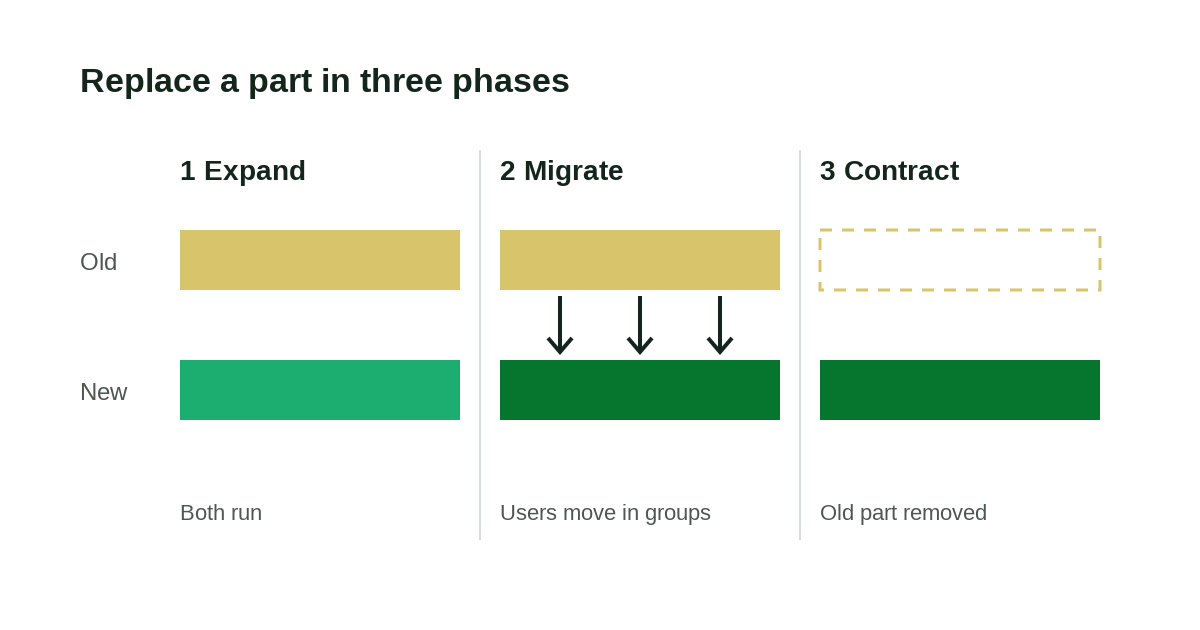
Replacing a legacy system without losing what it does
Most failed replacements were planned as a build, not as a move. What to leave behind, how to run old and new side by side, and when the way back closes.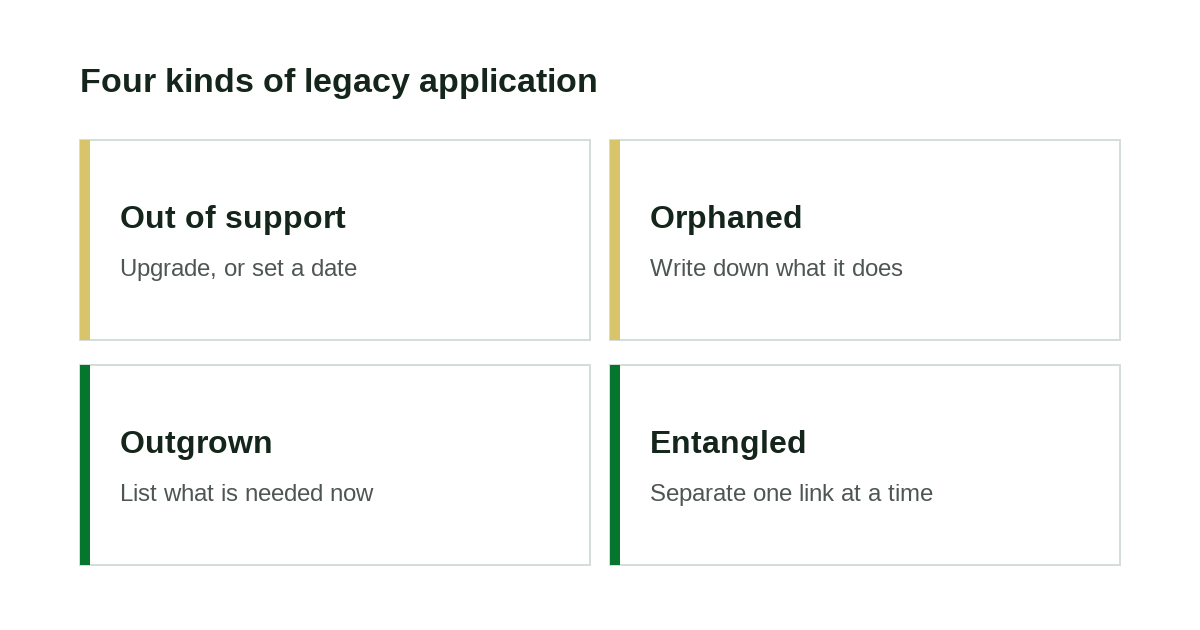
Legacy applications: what makes one, and what to ask
What makes an application legacy has little to do with age. The four kinds, six questions that place yours, and what each kind needs.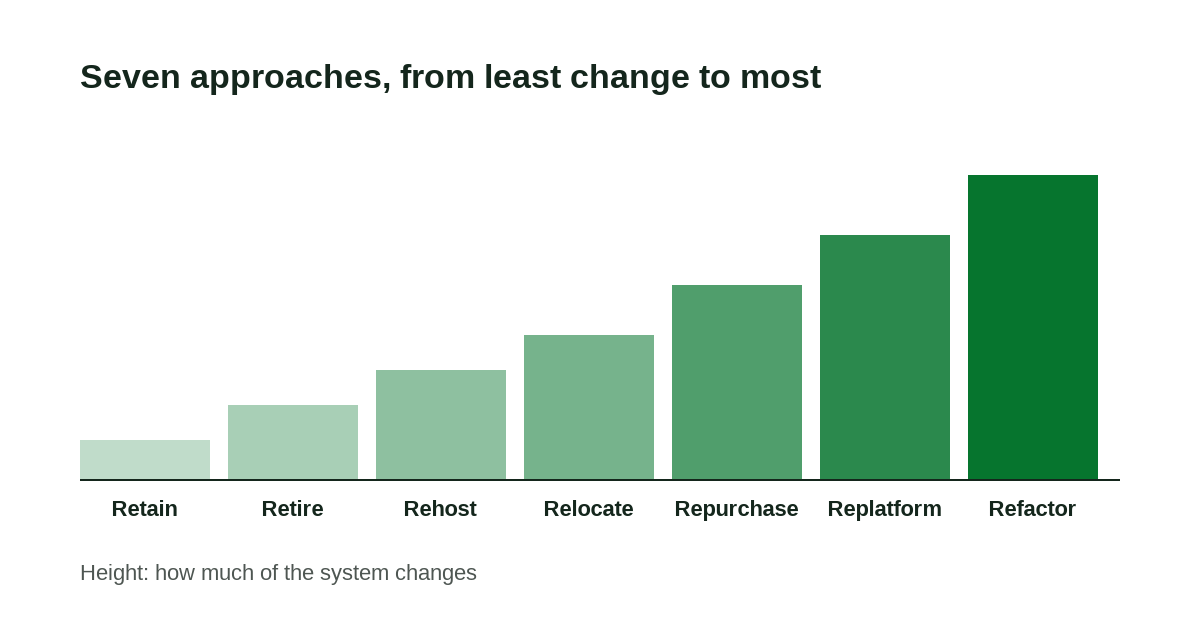
Legacy system modernization approaches, in plain terms
The seven standard approaches to modernizing a legacy system, what each means for a website or web application, and how to choose between them.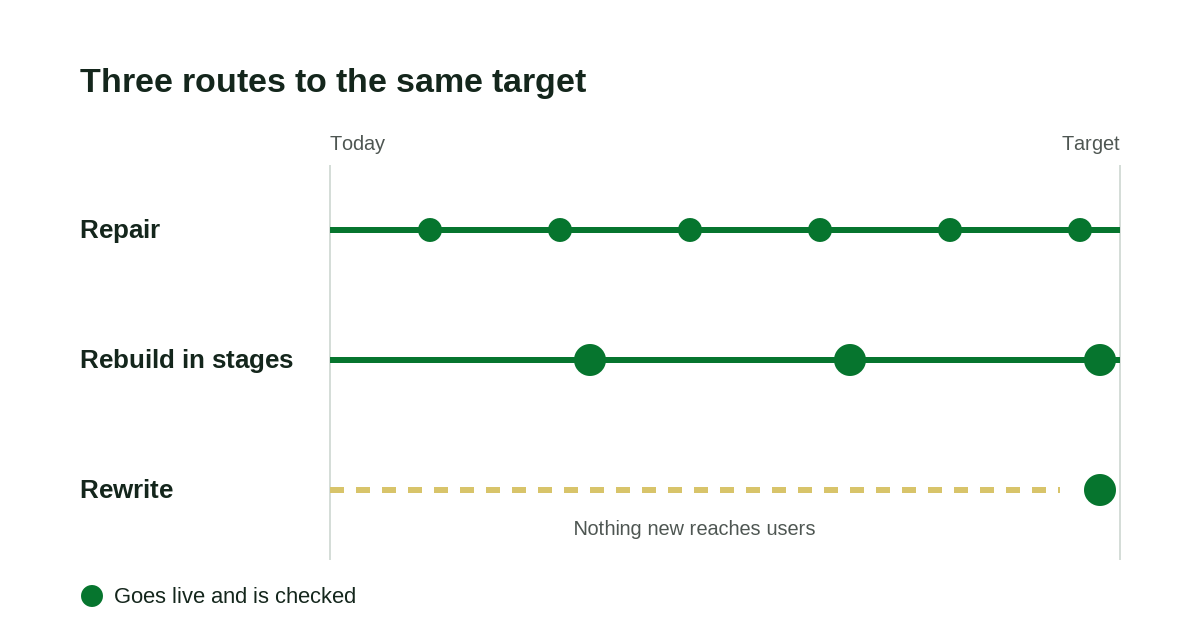
Rewriting a legacy application: when it is the wrong call
A rewrite feels clean and often fails. How to judge whether to repair, rebuild in stages or rewrite a legacy application, and what to check first.
Modernization decisions
How to decide whether, when and how to modernize a website or web application.
An application modernization roadmap you can hold a team to
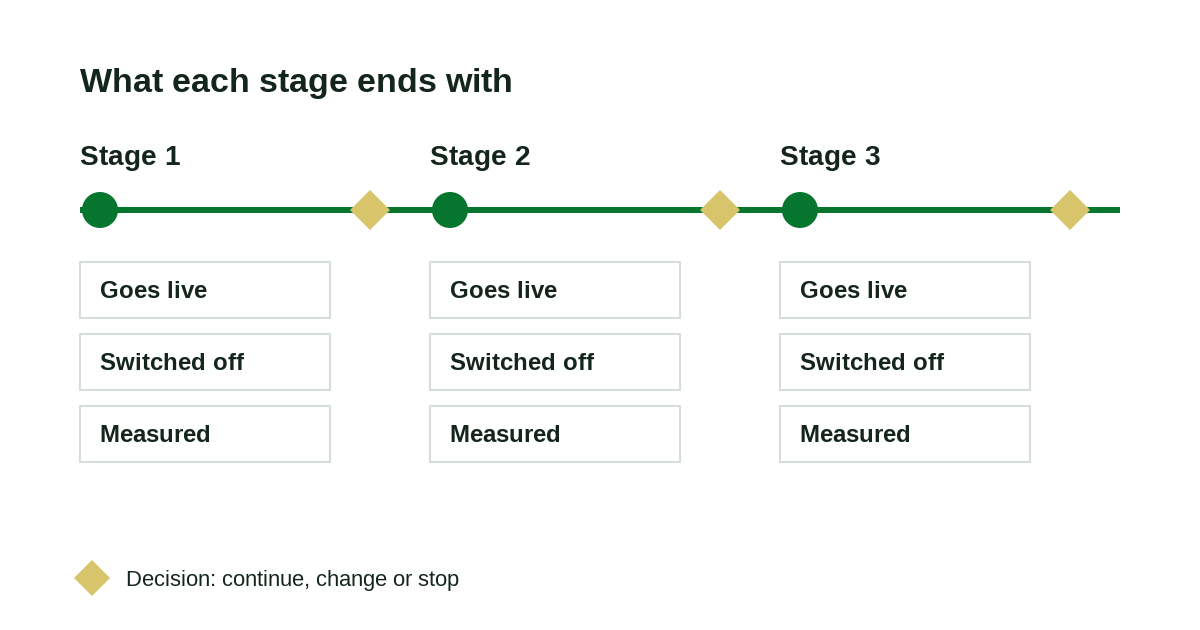
A useful modernization roadmap says what goes live and what is measured after each stage. Five things every stage must state, and how to order them.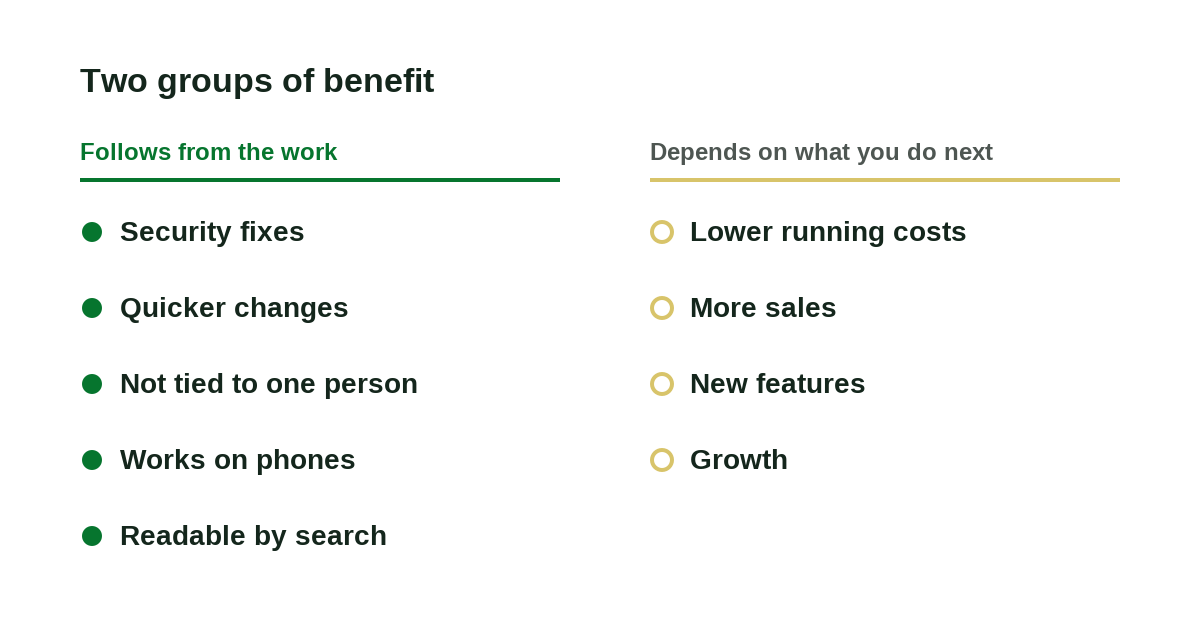
Benefits of application modernization you can check
Which benefits of application modernization come from the work itself, which depend on what you do next, and three questions that test any claim.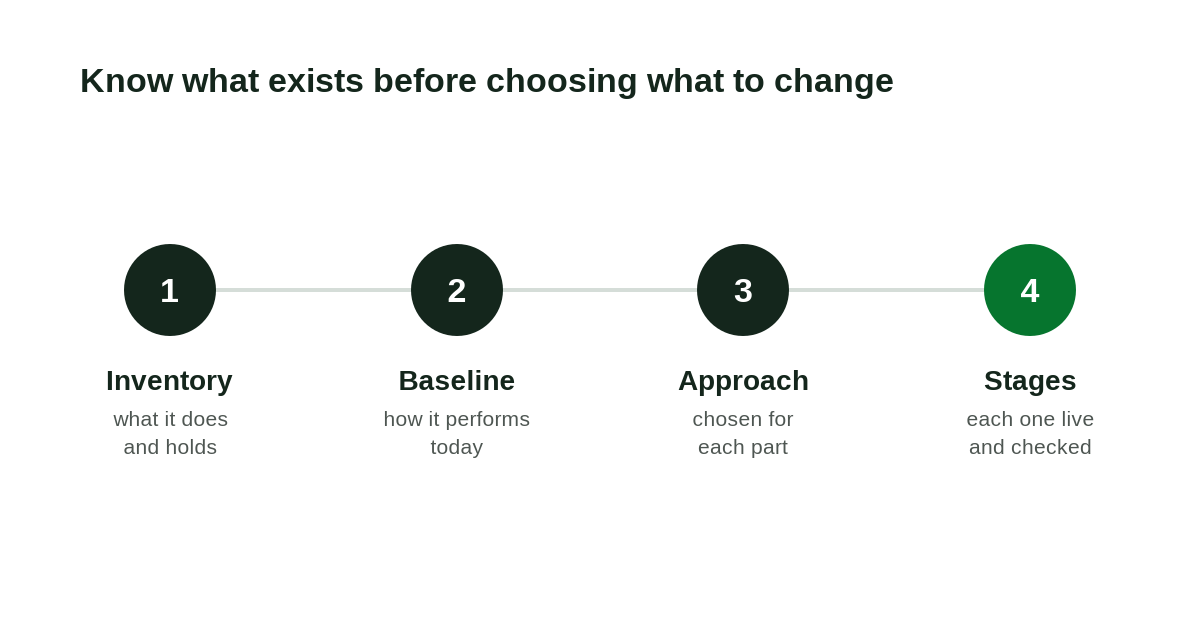
Application modernization: what it means and when to do it
Application modernization in plain terms: what it is, what it is not, the signs a web application needs it, and how to start without betting the business.
Process automation
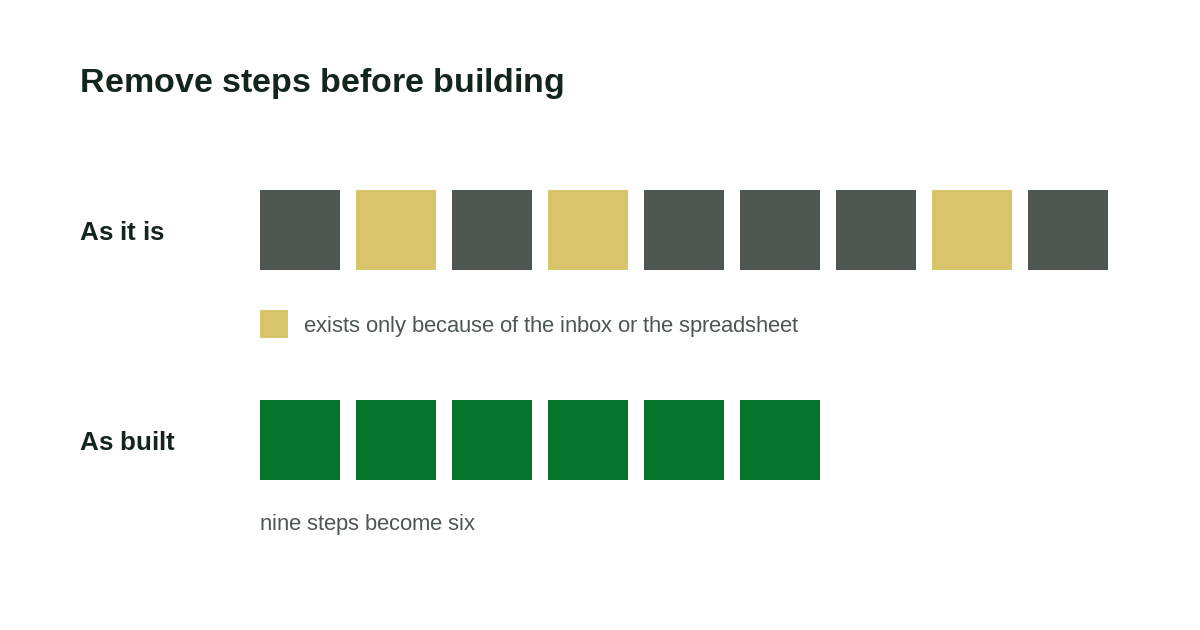
Which business processes are worth automating, and what to work out before any software is built.
Product experience
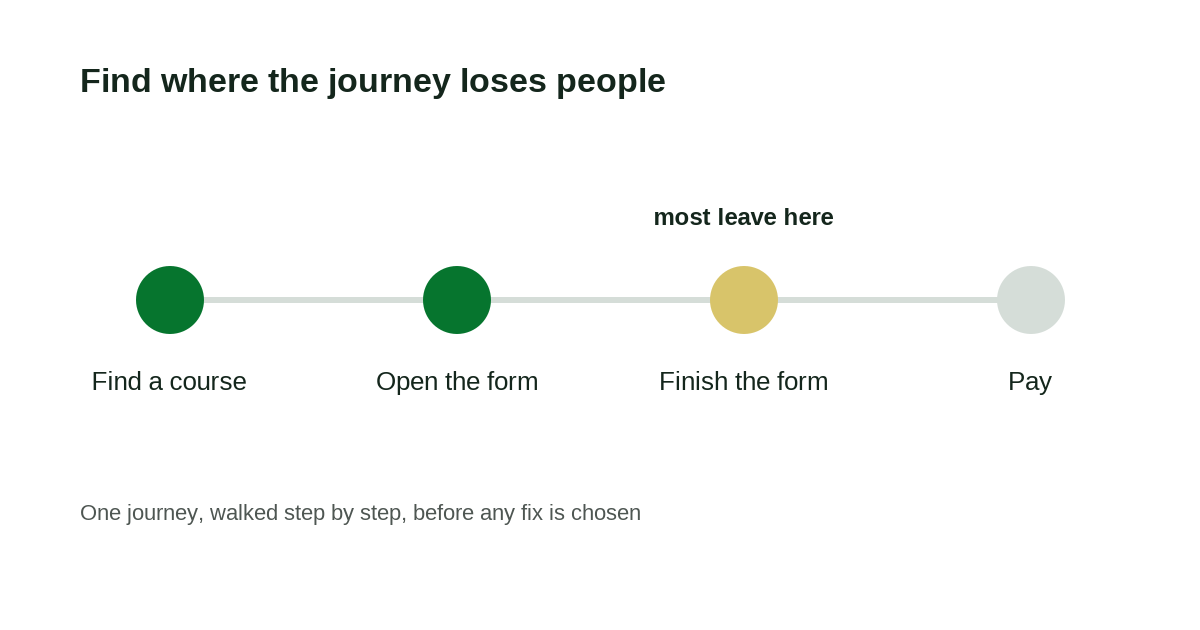
Finding where a website or product loses its users, and what to learn before changing it.
Technical debt
What technical debt is, how to measure it, and how to decide what to pay down first.
Legacy technical debt: the debt nobody decided to take
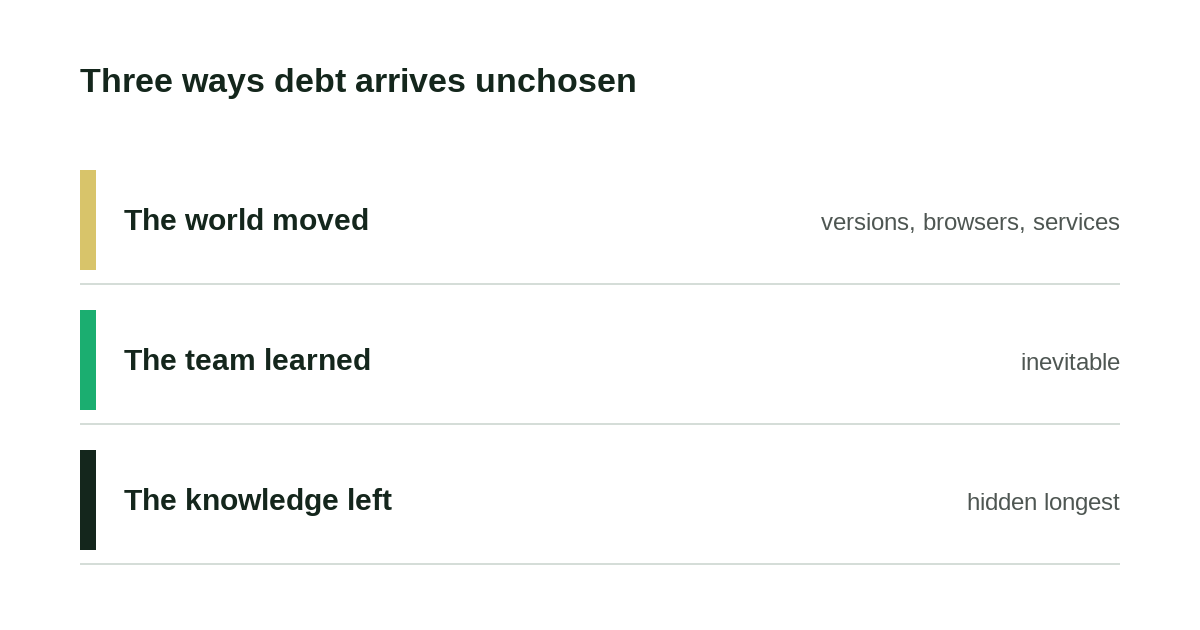
Much technical debt was never a decision: the world moved, the team learned, the knowledge left. Why it stays hidden, and four questions that find it.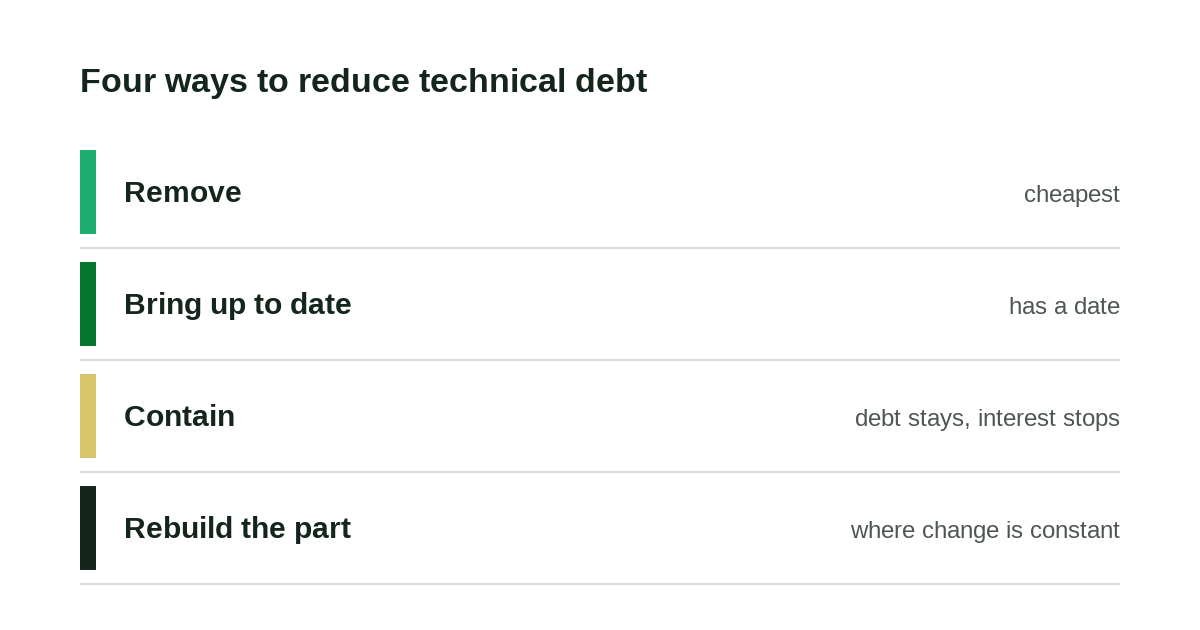
Reducing technical debt: what the work consists of
Reducing technical debt is one of four kinds of work: remove, update, contain or rebuild. What each costs, the order to do them in, and the proof to ask for.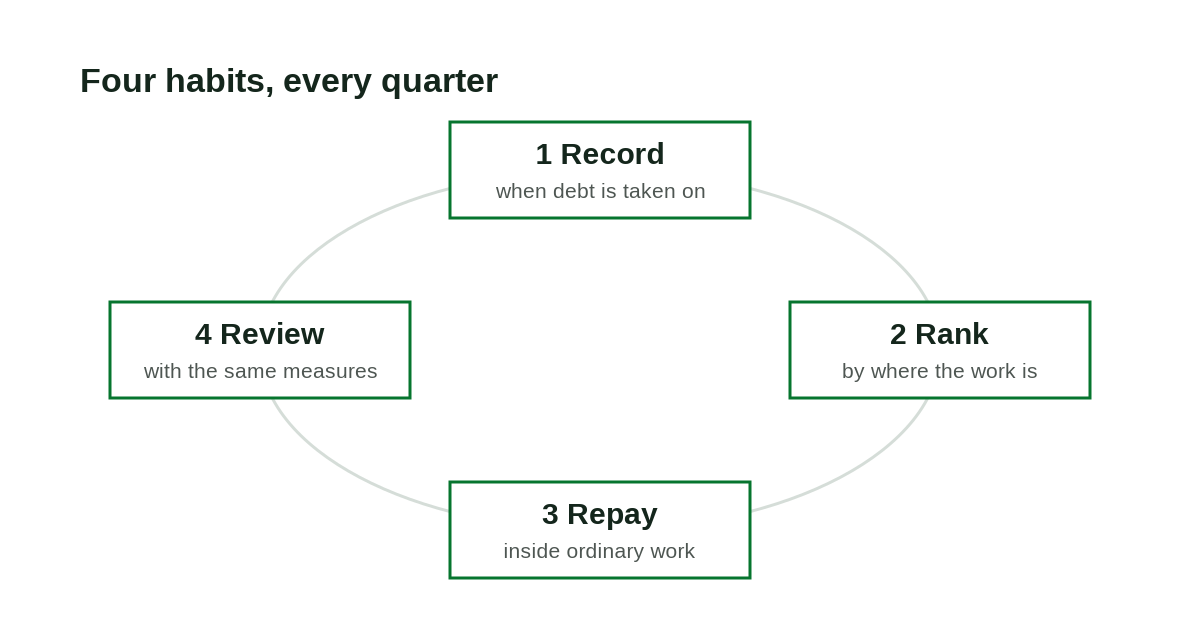
Managing technical debt as a routine, not a rescue
Clean-up projects stall because the business cannot stop for them. Four habits that keep technical debt in hand, and the decisions only the owner makes.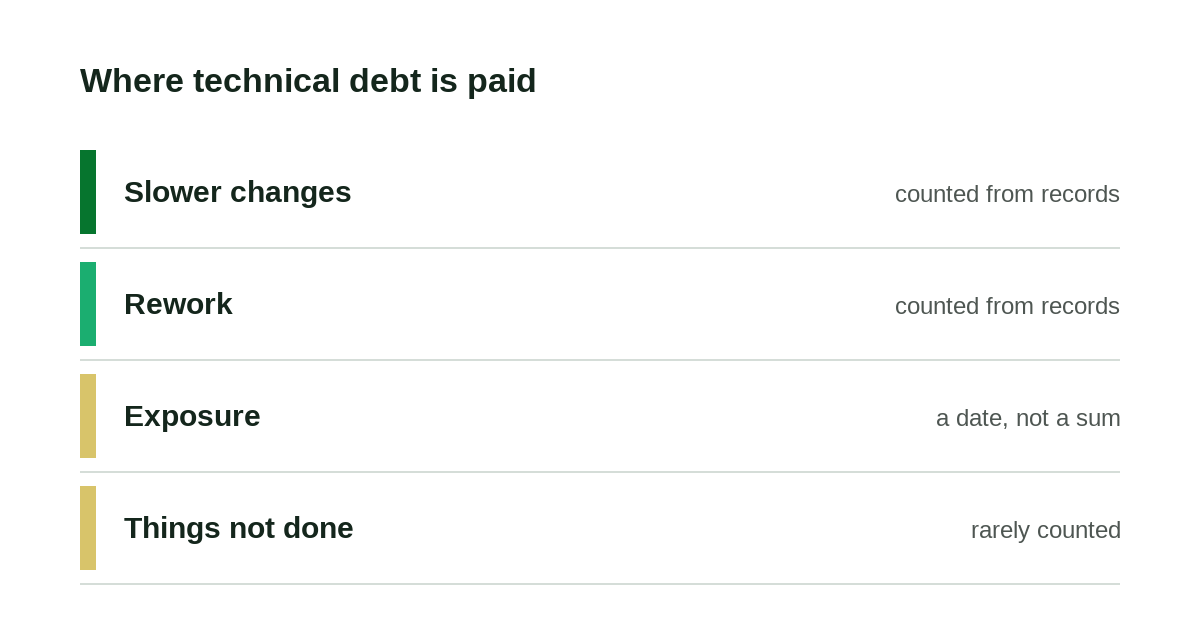
The cost of technical debt, and how to put a figure on it
Technical debt is paid in four places, and only one is near an invoice. How to build a yearly figure good enough to set beside the price of a repair.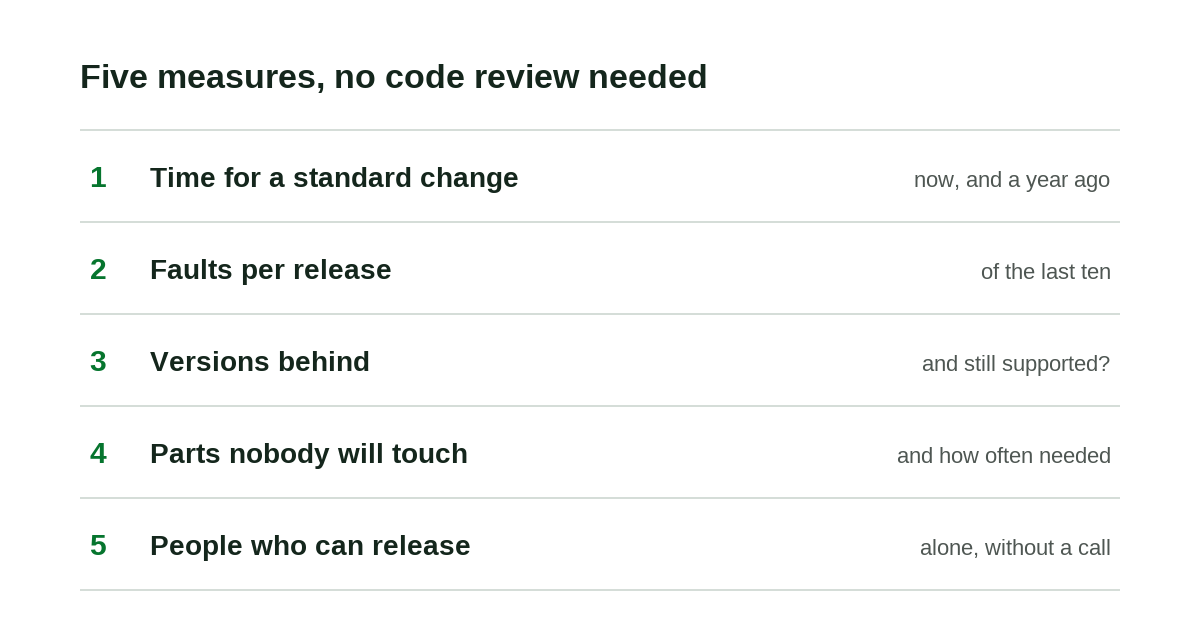
Measuring technical debt without reading the code
Five measures a non-technical owner can ask for to size technical debt, how to read them together, and why a single debt score misleads.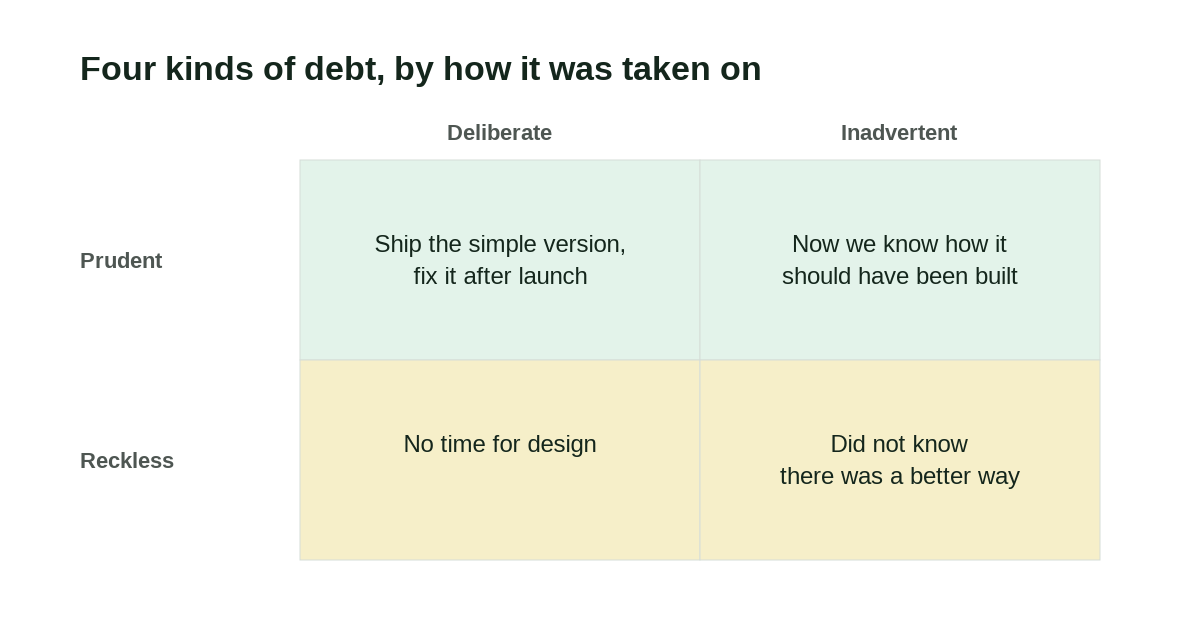
Types of technical debt, and which ones to worry about
Technical debt is not one thing. The four kinds in the quadrant, six categories by where they sit in a website, and which deserve attention first.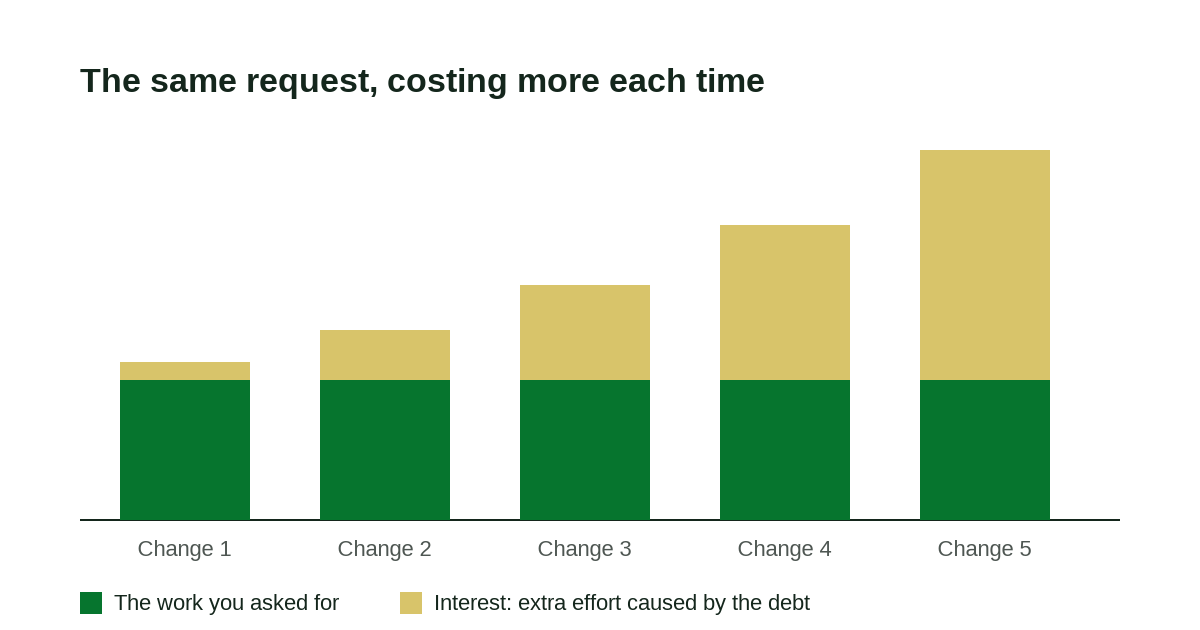
Technical debt, explained for the person who pays for it
What technical debt is, where it comes from, how to tell useful debt from neglect, and the signs that it now costs more than fixing it would.
Workflows
How work moves between people and systems, and how to design that movement so it can be automated.