
A commercial cleaning company wins a new office building about once a week. Getting a site started takes the same things every time: a survey, a staffing plan, keys and access passes, supplies delivered, a first-night inspection. In theory it takes ten days. In practice it takes anything from eight to forty, and the operations manager finds out which only when the client phones.
Nothing is missing. Every step has a person who does it well. What nobody owns is the passing from one person to the next. That passing is the workflow, and it can be built so that it does not depend on memory.
What a workflow is
A process is everything that has to happen for a piece of work to be done. A workflow is the route one case takes through it: the stages it passes, who holds it at each stage, and what has to be true for it to move on. One new site is a case. So is one purchase request, or one job application.
Automating a workflow means that software holds each case, shows it to the person whose turn it is, moves it when the conditions are met, and keeps the record. The people still do the surveying and the deciding. Which processes are worth this treatment, and what to settle before any software, is covered in process automation: what to settle before building. This article is about the next step: describing the route precisely enough that it can be built.
Five things to write for every stage
A workflow is ready to be built when each stage can be written on one card with five lines. A stage that cannot be written this way is not yet understood, and software will not make it so.
- Who holds it. One role, not a department. "Operations" is nobody. "The area supervisor" is somebody.
- What they need. The information and documents required to act, and where each comes from. If the supervisor needs the floor plans, the stage before must have collected them.
- What moves it on. The condition for leaving the stage, stated so that two people would agree whether it has been met. "Survey done" is vague. "Survey form complete, with floor area and number of washrooms" is not.
- How long it may stay. A limit, and what happens when it passes: a reminder, then a named person told.
- Where else it can go. Back a stage, on hold, cancelled. The routes that are not the happy one.
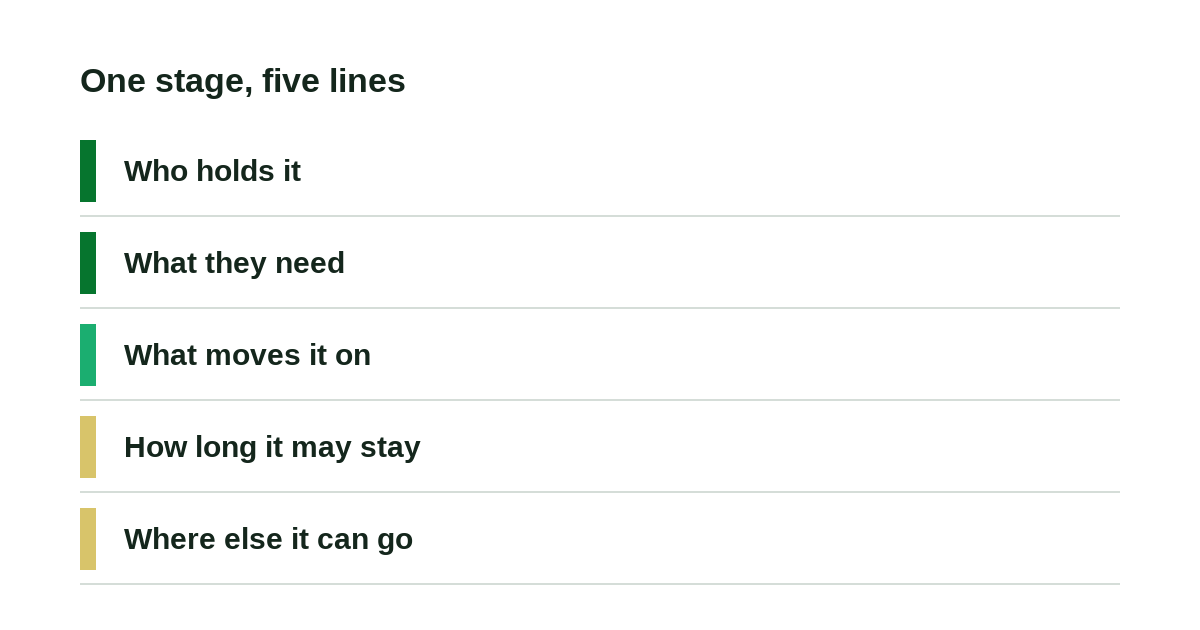
The fifth line is where most designs are thin. Hand-run workflows deal with the unusual case by someone using their judgement and sending an email. If the built version has no place for that, people go back to email for the hard cases, and the software holds only the easy ones.
Signs of a weak design
You can review a proposed workflow without technical knowledge by looking for these.
- A stage held by a group. Everyone can see it, so nobody acts.
- An approval that is never refused. If the answer is always yes, it is a notification, and it should not hold the case up.
- Stages with no limit. A case can sit for ever without anyone being told.
- Status that has to be asked for. The client, or the colleague who started the case, should be able to see where it is without phoning.
- The same detail entered twice. A sign that two stages were designed separately.
- Too many stages. Every stage is a wait. If two always happen together and are done by the same person, they are one.
Two neighbouring subjects meet here. When a stage needs data from another system, or has to send some, that connection is designed with the workflow, and the general picture is in enterprise application integration, without the jargon. And the best way to learn what a stage really needs is to watch the person who does it, a method described in user experience research: what to learn before you change.
Twelve new sites, six stages, at the cleaning company
The cleaning company is invented; the method is not. The operations manager follows the last twelve new sites through, from signed contract to first inspection, and writes the cards.
There turn out to be six stages: contract details, survey, staffing plan, access, supplies, first-night inspection. Writing the five lines exposes three faults. Access, meaning keys and passes, was held by "the office", and it is where sites waited longest: a median of nine days, because each person assumed another had asked the client. The survey had no condition for being finished, so staffing plans were made from incomplete surveys and redone. And there was no route for a client who delays the start date, so those sites sat in everyone's list as late.
The design that is built has the same six stages and different cards. Access is held by the account manager and starts on the day the contract is signed, alongside the survey, not after it. The survey cannot be closed without the four figures the staffing plan needs. A site can be put on hold with a date, and leaves everyone's list until then. Each stage has a limit of two working days, after which the operations manager is told. The client receives a link showing the six stages and where their site stands.
The figure before is written down: a median of nineteen days from contract to first clean, across the twelve. It will be compared after the next twelve.
Describing your workflow before anyone quotes
- Choose one kind of case and follow the last ten through, noting where each waited.
- Write a card for every stage with the five lines. Leave blank what nobody can answer.
- Read the cards against the six signs.
- Settle the blanks with the people involved before asking anyone for a quote.
A workflow described this way is most of a written scope. If no ready-made product fits it, it can be built as a web application around that one process, with a view for each person who takes part in it. That is our business process automation work, scoped in writing before the build and measured against the baseline afterwards.
Keep reading
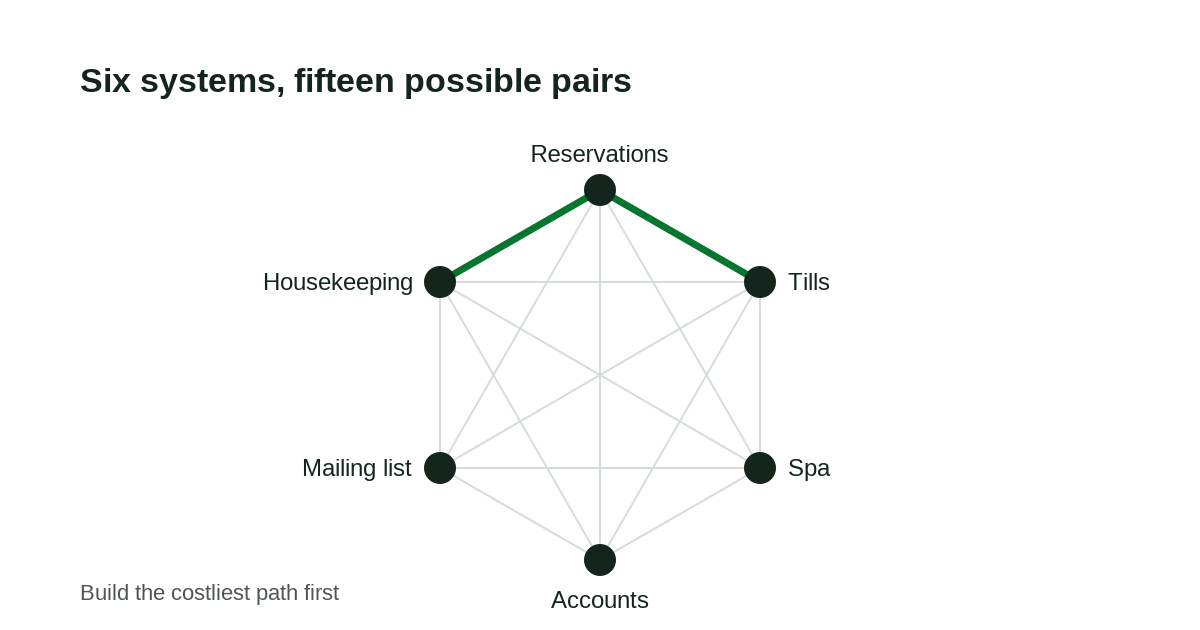
Enterprise application integration, without the jargon
When a business runs six systems, the trouble is the space between them. What to map before buying anything, and why to connect one path at a time.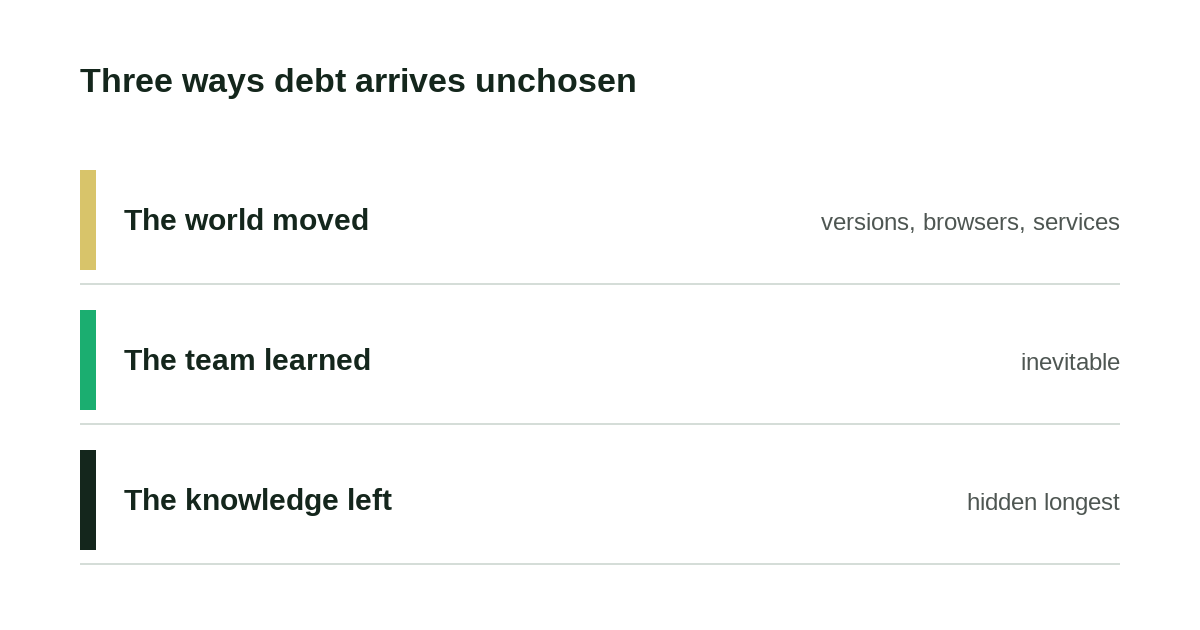
Legacy technical debt: the debt nobody decided to take
Much technical debt was never a decision: the world moved, the team learned, the knowledge left. Why it stays hidden, and four questions that find it.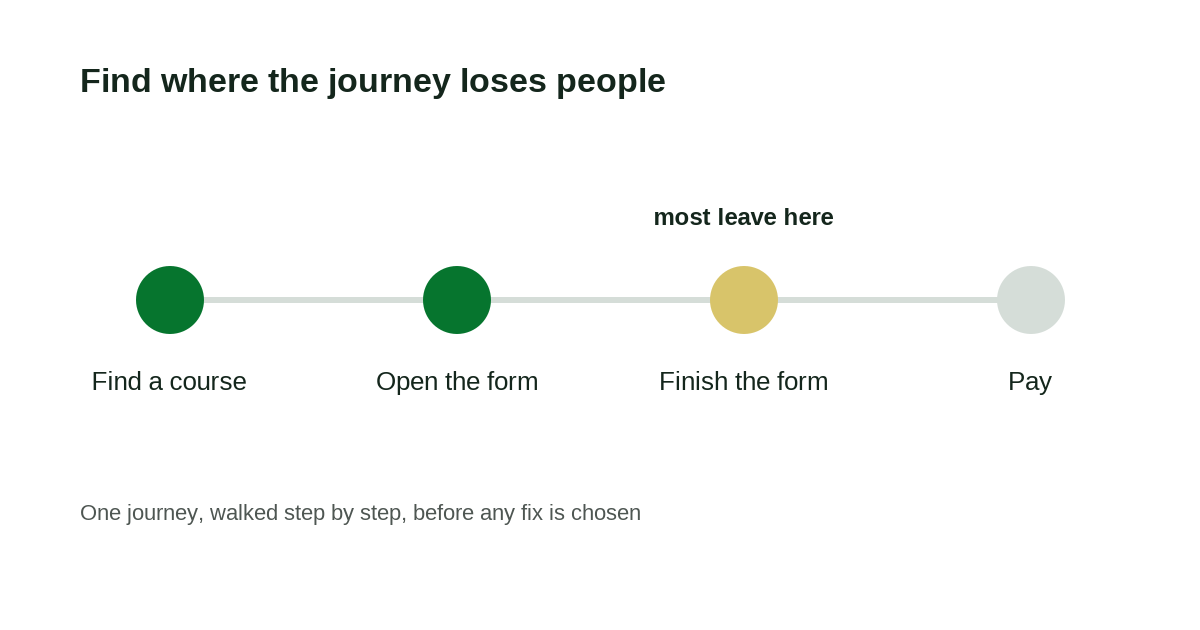
User experience optimization: find the fault first
Before a redesign, find where people give up. How to walk the journeys that matter, read the evidence you already hold, and rank what you find.